Which Aqualane Shores Canal Fits Your Boat?

If you are dreaming of stepping from your lanai onto your boat and being in the Gulf within minutes, Aqualane Shores makes it possible. The question is not whether the neighborhood offers water access. It is whether a specific canal and dock will safely fit your exact vessel. That detail determines daily usability, insurance, and long-term value.

In this guide, you will learn how to match your boat’s dimensions to a property’s canal and dock, what to verify before you write an offer, and where to find authoritative local information. You will also see how typical boat classes tend to pair with Aqualane Shores canals. Let’s dive in.

Aqualane Shores waterways at a glance

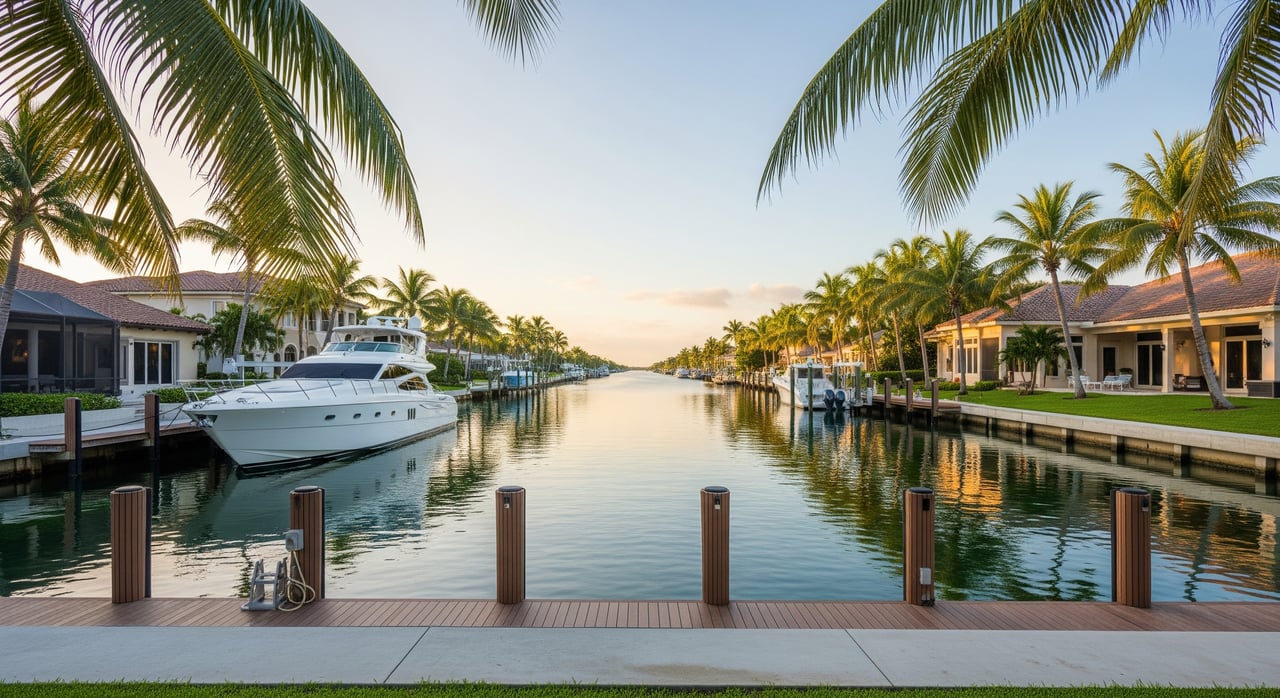
Aqualane Shores sits on Naples Bay in the City of Naples. Most homes are on canals or front the bay, and those canals connect directly to Naples Bay with nearshore access to the Gulf through the Gordon Pass area. Compared with inland canal systems, your run to open water is usually short.

The practical constraints are local. You need enough canal width to turn, enough depth at your dock and along the route, a dock configuration that fits your boat, and awareness of tides and currents near the bay. Fixed bridges are not typically an issue between most Aqualane Shores canals and Naples Bay, but you should still verify the route for any overhead structures before you buy.

For navigation planning and tide effects, lean on official data. Review the NOAA Office of Coast Survey nautical charts and check NOAA tide and current predictions for Naples Bay when assessing depth and timing.

The four measurements that decide fit

Usable berth length

Start with your boat’s length overall. Then measure the dock’s usable length, not just the advertised dimension. Subtract space taken by pilings or finger piers and leave a practical buffer to neighboring docks. Berth orientation matters. A stern-to setup or a side-tie can change what actually fits.

Depth at the dock and along the route

Know your draft at minimum operating load and compare it to the water depth at your dock at the lowest expected water. Depth through the canal entrance and into Naples Bay matters too, especially if there is shoaling near a canal mouth. If you are uncertain, hire a local marine surveyor to run soundings at mean low water.

Turning room and canal width

Even a modest center console is easier to handle when you have space. As a general rule of thumb, having 1.5 to 2 times your boat’s length in unobstructed water makes turning more comfortable. The right number depends on your propulsion, wind, current, and the presence of finger piers or opposing docks. A canal with a turning basin is helpful for larger vessels.

Clearance and obstructions

Confirm there are no low fixed bridges or overhead utilities between the property and Naples Bay if you run a flybridge, tower, or mast. Also note neighboring dock configurations, moored boats, and any seasonal debris that could tighten your approach.

How boat types pair with Aqualane Shores canals

These are general guidelines. Always verify actual measurements and conditions on-site before you buy.

  • Small skiff or bay boat, about 14 to 22 feet. These boats draw shallow and need shorter berths. Many canals in Aqualane Shores can accommodate them with minimal modification.
  • Center console or runabout, about 20 to 30 feet. These boats typically need modest berth length and 3 to 5 feet of depth at low water. Most residential docks can fit them if usable length is adequate. Verify alongside depth and canal entrance conditions locally.
  • Express cruiser or family yacht, about 30 to 45 feet. These boats need longer berths, deeper water, and more maneuvering room. Finger piers and proper piling spacing help. Confirm dock length, clearance to neighbors, and lift or piling capacity if you plan to install a lift.
  • Sportfisher or large motor yacht, about 45 to 70 plus feet. These vessels require substantial berth length, deeper draft, and significant turning radius. Not every residential canal will suit them. Look for direct, reliable access to Naples Bay, adequate depth through the canal entrance, and pilings or dock structures designed for the vessel’s weight and forces.
  • Sailboats. Air draft and keel depth control your options. Verify the route for overhead clearance and confirm depth from the dock to Naples Bay. Sailboats can need more turning room than motorboats of similar length.

Buyer checklist before you write an offer

Pre-offer document requests

  • Ask for as-built dock drawings, all dock and lift permits, a survey showing the bulkhead line and dock location, and any recent seawall inspection reports.
  • Request documentation of any depth soundings alongside the dock and in the access channel, plus maintenance and dredging history if available.
  • Confirm whether any recorded neighborhood covenants or deed restrictions limit dock size, lift type, or boat type.

On-site verification

  • Measure usable berth length after accounting for pilings, fingers, and a safe buffer to adjacent docks. Decide whether you would berth stern-to or alongside.
  • Hire a local marine surveyor or captain to run soundings at mean low water and to assess turning room under typical wind and current.
  • If the seller allows, complete a test approach with a qualified captain under similar tidal conditions.
  • Check for overhead lines, neighbor dock configurations, and any seasonal obstructions that could affect access.

Technical checks

  • Compare your draft to the lowest expected water depth at the dock. Do not assume published depths are current without soundings.
  • Confirm turning radius based on your propulsion and canal width. The 1.5 to 2 times LOA rule is a starting point only.
  • Evaluate piling spacing and capacity if you plan a boat lift. The lift and pilings must be rated for the full weight of your vessel.

Cost considerations

  • Budget for possible dredging, dock or lift upgrades, permitting fees, and any seawall repairs. Work that involves submerged lands or environmental resources can add time and cost.

Permits, rules, and who to call

Dock, lift, and seawall work typically requires local and state permits. In Naples, check with the City of Naples Building and Planning Department and with Collier County Permitting and Environmental Services to confirm local rules and any permit history tied to the property. For work affecting sovereign submerged lands or environmental resources, consult the Florida Department of Environmental Protection.

If you expect environmental review, plan for additional steps when mangroves, seagrass beds, or wetlands are nearby. Dredging a private canal or access area is often complex and can be costly. Maintenance responsibility varies by canal, so confirm who maintains the channel and who pays for dredging in title documents, recorded covenants, or municipal records.

For navigation and operations, use NOAA charts and NOAA tide and current predictions, and review general boating rules with the Florida Fish and Wildlife Conservation Commission.

Putting canal fit into practice

Think about property types within Aqualane Shores and how they relate to your vessel.

  • Bayfront exposure. You may gain more room to maneuver and a shorter run to the Gulf. Confirm wind and current set at the dock and verify piling and dock design for larger vessels.
  • Interior canal with turning basin. This can suit mid-size cruisers that need a comfortable turn. Confirm basin depth and any shoaling at the canal mouth.
  • Narrower canal without a basin. Smaller boats or highly maneuverable center consoles with bow thrusters do best. If you plan a larger yacht, ensure there is adequate unobstructed width and depth, and assess neighbor dock layouts.

In all cases, match your boat’s LOA, beam, draft, and air draft to the measured attributes of the dock, canal, and route to Naples Bay. Then verify with documentation and soundings before you commit.

Next steps to confirm your fit

When you are ready to compare specific properties, our team can assemble the right documents, line up the right local experts, and help you assess canal-by-canal fit for your boat. If you want discreet access to on and off-market options, connect with The Silvers Group to schedule a consultation.
FAQs

What controls boat fit in Aqualane Shores canals?

  • The deciding factors are usable berth length, water depth alongside the dock and through the canal mouth, unobstructed turning room, and any local or recorded limits on dock size or boat type.

How do I verify depth and turning room before buying in Aqualane Shores?

  • Obtain dock plans and permits, commission soundings at mean low water with a local surveyor, measure the berth, and if possible perform a test approach with a qualified captain.

Do I need a permit to add a boat lift or modify a dock in Naples?

  • Yes, dock, lift, or seawall work typically requires local and possibly state permits through the City of Naples or Collier County, and in some cases the Florida Department of Environmental Protection.

Who pays for dredging of private canals near Naples Bay?

  • Responsibility varies by canal and may fall to private owners or an association, so confirm through title documents, recorded covenants, or municipal records.

Are there bridge height limits between Aqualane Shores and the Gulf?

  • Canals generally open directly to Naples Bay without low fixed bridges, but you should still verify the specific route for overhead utilities or structures and confirm air draft clearance.

Work With Us

Bringing together a team with the passion, dedication, and resources to help our clients reach their buying and selling goals. With you every step of the way.