Choosing between a villa, a mid-rise, or a high-rise in Pelican Bay can feel like three great options with very different day-to-day experiences. You may want Gulf views, privacy and a yard, or a true lock-and-leave lifestyle. This guide breaks down what changes when you choose each product type, from views and privacy to amenity access, fees and due diligence. You will leave with a clear next step and a checklist to buy with confidence. Let’s dive in.
Pelican Bay at a glance
Pelican Bay in Collier County is a master-planned coastal community with about 6,500 residences and a unique set of community amenities that come with ownership. The Pelican Bay Foundation runs the private beaches, tram service, Community and Fitness Center, racquets program, and beachfront dining. You can confirm the community overview and fee structure in the Foundation’s materials for realtors.
All owners pay a Foundation assessment each year. The Foundation also collects a one-time resale capital assessment at closing, which the Foundation’s estoppel lists at $10,000 for the current cycle. Review the latest estoppel for details on operating and reserve line items.
The electric tram connects eight stations along the berm and boardwalk system and carries more than 900,000 trips per year to the North and South beach facilities. You will find two beachfront restaurants, Marker 36 on North Beach and the Sandbar on South Beach, operated by the Foundation.
When you buy in Pelican Bay, you usually encounter three fee layers:
- Your building or neighborhood dues (HOA/condo)
- The Pelican Bay Foundation annual assessment and resale capital assessment at closing
- Pelican Bay Services Division (PBSD) non-ad valorem assessments on your county tax bill that fund streetscapes, stormwater and similar services inside Pelican Bay
For a quick orientation, the community map helps you visualize where high-rises, mid-rises and villa enclaves sit within Pelican Bay.
Where each home type sits
High-rise towers
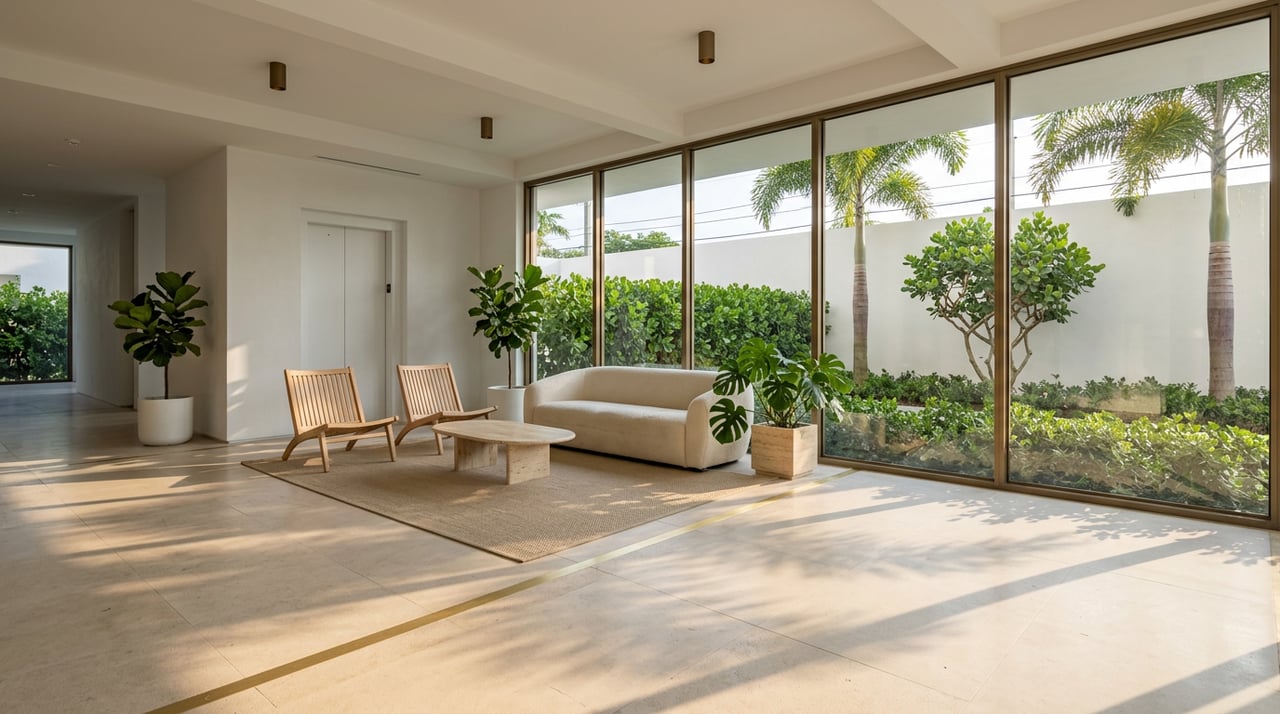
If Gulf views are your North Star, high-rise living is your most direct path. Beachfront towers concentrate in Bay Colony and The Strand at Bay Colony, along with additional towers elsewhere in Pelican Bay. Newer ultra-luxury buildings, such as Mystique (delivered in 2019), package large floor plans with concierge-style services and secure parking.
Mid-rise buildings
Mid-rises typically range from 3 to 7 stories and sit around internal lakes, preserves and along the berm system. Some stacks capture partial Gulf or preserve views. You are often closer to everyday community conveniences and Foundation amenities than in the farthest beachfront towers, with a lower price per square foot than top tower floors in many cases.
Villas and coach homes
Villas include attached or freestanding homes in small enclaves with direct street access, private garages and outdoor space. Many sit along lakes and preserves or quiet internal streets. You can find classic neighborhoods like Oakmont and Villas of Pelican Bay among others. Villas rarely capture direct Gulf vistas unless you are in a very limited beachfront single-family pocket in The Strand.
Views, privacy and access
Views and orientation
- High-rise: Highest odds of wide Gulf panoramas from west-facing terraces, especially in Bay Colony and along the beach. Orientation and floor matter a great deal, since some stacks face Clam Bay or internal lakes instead of open water.
- Mid-rise: A mix of partial Gulf, preserve or lake views depending on building and line. Fewer floors can mean more tree-top or garden exposure.
- Villas: Green-space and water features are the norm, with private lanais and yard areas. True beachfront views are limited to rare estate lots.
Privacy and noise
- High-rise: Expect shared lobbies, elevators and more guest activity, which some owners enjoy for the social energy. Staffed buildings add convenience yet increase foot traffic.
- Mid-rise: A balanced feel with fewer neighbors per stack than a tower. Common areas are quieter, but you still share walls and entries.
- Villas: The most private option with your own garage, entry and outdoor space. Street noise, rather than elevator or lobby sounds, is the typical tradeoff.
Amenity access
Every owner in Pelican Bay receives Foundation membership, which unlocks the private beaches, tram, fitness center and racquets program, plus beachfront dining. If beach access is your must-have, any home type delivers it.
Building-level amenities vary:
- High-rise: Often concierge, multiple pools, in-building fitness, guest suites and secure parking. You pay for those services in association dues.
- Mid-rise: Usually a pool, fitness room, community room and covered parking. Fewer resort-style services than marquee towers.
- Villas: Rely more on neighborhood amenities and the Foundation offerings. Some enclaves have a small community pool or clubhouse, but many do not.
If golf is a priority, remember that Club Pelican Bay is a separate private club with its own application and waitlist. Foundation membership does not include golf. Review current categories and timelines with the club directly.
Costs, fees and insurance
Before you compare list prices, align on the full cost picture.
- Building or neighborhood dues: Tower fees are generally the highest because they include robust staffing, elevators, large common areas, substantial insurance and strong reserves. Mid-rise dues trend lower than flagship towers. Villa HOA dues are often lower still, since you maintain more of your own structure and there are fewer shared systems. Always confirm whether a quoted amount is monthly or annual.
- Pelican Bay Foundation: The Foundation assesses owners annually and, on resale, collects a capital assessment currently published at $10,000. Verify the current figure in the estoppel.
- PBSD assessments: The Pelican Bay Services Division funds internal streetscape, stormwater and street lighting through non-ad valorem assessments on your Collier County tax bill. Review county budget materials for planned projects that may affect future assessments.
Insurance and statutory items to understand:
- Condo master policies vs. HO-6: Condo associations maintain master policies that cover common elements and parts of the structure. Your unit policy (HO-6) typically covers interiors, contents and loss assessments, with separate hurricane deductibles. Ask for the association’s master policy summary and deductible schedule so you can align your coverage.
- Milestone inspections: Florida law requires milestone inspections for condo and cooperative buildings 3 stories or higher at 30 years of age, or at 25 years if within 3 miles of the coast when a local jurisdiction requires earlier timing. Findings can drive reserve changes or special assessments. Confirm each building’s inspection status and any Phase 2 work.
Useful references:
Lifestyle fit
Here is a quick way to gauge which product type matches your daily routine and long-term plans.
High-rise may fit if you want:
- A lock-and-leave lifestyle with on-site staff and services
- Strong security and valet or secure garage parking
- Immediate access to resort-like amenities and the shortest path to Gulf views
Mid-rise may fit if you want:
- A quiet building with a handful of amenities and covered parking
- A balance of community life and privacy
- Lower carrying costs than flagship towers in many cases
Villas may fit if you want:
- Private outdoor space for entertaining, gardening or pets
- Direct street access and a garage
- Fewer shared spaces and a single-family feel
Buyer due diligence checklist
Use this list early in your search and again at contract review.
- Request the association estoppel certificate and confirm: current dues, any special assessments, the Pelican Bay Foundation annual assessment and the current resale capital assessment amount at closing. The Foundation’s estoppel shows how these line items are presented.
- Verify structural milestone inspection status for any building with 3 or more stories. Ask for reports and any Phase 2 scopes or remediation plans in progress.
- Review the last 12 to 24 months of association meeting minutes for reserve funding, planned capital projects, litigation and recurring special assessments.
- Obtain the association’s certificate of insurance, master policy summary and hurricane deductible schedule. Align your HO-6 coverage and loss-assessment endorsements accordingly.
- Confirm PBSD non-ad valorem assessments on recent tax bills and scan county budget materials for planned projects in Pelican Bay.
- Check flood maps and ask for elevation certificates if available. Elevation and flood zone affect insurance costs.
- Verify deeded parking, guest parking rules and storage. In towers, locker availability varies by line or stack.
- Understand rental rules early. The Foundation requires a lease application at least 30 days before occupancy and charges a processing fee while transferring member privileges to the tenant for the lease term. Each building sets its own minimum lease terms and blackout months.
- For beachfront access, verify whether the residence is walkable to a boardwalk or requires a tram ride, and identify the closest station. This affects your daily routine.
Helpful links as you verify:
Which option is right for you?
Start with your non-negotiables. If Gulf views and on-site services sit at the top, look at high-rises with the exposure and floor height you want. If you want space, privacy and a garage with fewer shared areas, explore villa enclaves. If you like a balanced lifestyle and a simpler fee profile, target mid-rises near the berm or preserves.
No matter which path you choose, the Foundation amenities deliver the Pelican Bay experience across the board: private beaches, tram convenience and active fitness and racquets programs. Your fit comes down to how you want to live each day and how you prefer to carry costs over time.
If you would like a tailored short list of buildings or enclaves that match your view, privacy and fee goals, connect with The Silvers Group. Our team pairs deep Pelican Bay expertise with discreet access and hands-on due diligence to help you buy with clarity.
FAQs
What do Pelican Bay homeowners pay besides their HOA or condo dues?
- Most owners pay three layers: building or neighborhood dues, the Pelican Bay Foundation annual assessment plus a one-time resale capital assessment at closing, and PBSD non-ad valorem assessments on the county tax bill.
Does every Pelican Bay owner get beach and tram access?
- Yes. Foundation membership is tied to ownership and includes private beach access, tram service and use of community amenities like the fitness center and racquets program.
How do high-rise, mid-rise and villa fees typically compare in Pelican Bay?
- Tower dues are usually highest due to staffing, elevators and large common elements. Mid-rise fees tend to be lower than marquee towers, while villa HOA dues are often lower still, since owners maintain more of their own structure.
What should I check about building safety before buying a condo in Pelican Bay?
- Confirm the status of required Florida milestone inspections for any 3-plus story building, review recent association minutes, and request insurance documents to understand reserves and potential assessment exposure.
Is golf included with Pelican Bay home ownership?
- No. Club Pelican Bay is a separate private club with its own membership process and, at times, waitlists. Foundation amenities do not include golf.
Can I rent out my Pelican Bay home seasonally?
- Often yes, but rules vary by association. The Pelican Bay Foundation also requires a lease application at least 30 days before occupancy and charges a processing fee while transferring member privileges to tenants during the lease term.