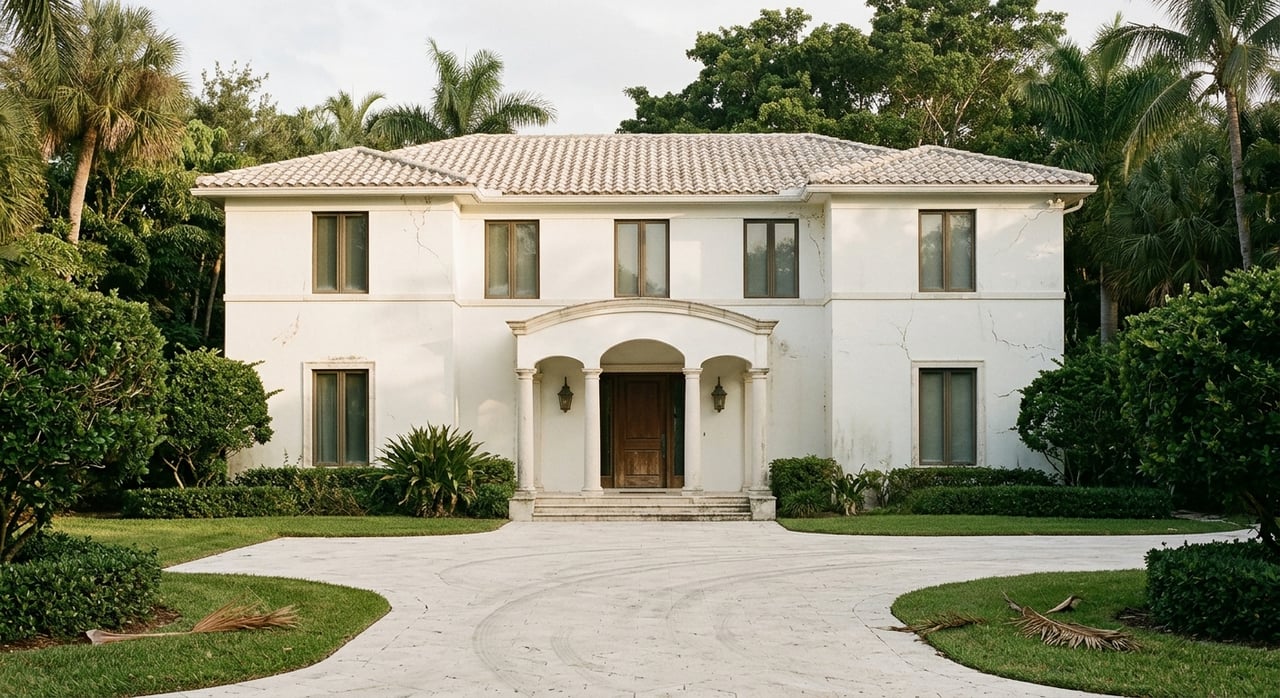
Selling A Port Royal Tear-Down Or Lot
If you are selling a Port Royal property with an older home, buyers may not be looking at it as a house first. In this part of Naples, many purchasers are really evaluating the site, the build potential, and how smoothly they can move toward demolition or redevelopment. If you want a stronger position in the market, it helps to understand what shapes value, what slows deals down, and what documentation serious buyers expect to see. Let’s dive in.
In Port Royal, land value often drives the conversation more than the existing improvements. The neighborhood is governed by the City of Naples R1-15A single-family district, which limits use to single-family residences and accessory structures and sets minimum lot area, lot width, and setbacks that define the build envelope.
For many older properties, that means buyers are studying what can be built next rather than what stands there now. If your home is dated or functionally obsolete for this market segment, your property may be judged primarily as a redevelopment site.
On waterfront parcels, the site itself becomes even more important. Survey details, shoreline conditions, dock layout, and water access can all affect how a future owner plans a new residence and marine improvements.
When a buyer considers a Port Royal tear-down or lot, the first question is usually simple: How buildable is this property? The answer depends on the lot dimensions, setbacks, waterfront conditions, floodplain review, coastal rules, and whether the property can move efficiently through the required approval process.
That is why entitlement readiness matters so much. A parcel with organized surveys, clearer records, and fewer unanswered questions can feel far more attractive than a site with uncertainty, even if both are in the same location.
For waterfront buyers and developers, marketing should usually focus on facts that support future use. That often includes:
The City of Naples zoning framework is one of the key drivers of value. In the R1-15A district, the code establishes standards such as minimum lot area of 15,000 square feet, minimum lot width of 100 feet, and required setbacks that shape where and how a future residence can be placed.
For a seller, this matters because buyers are not just paying for an address. They are paying for the development potential within that envelope. If a parcel presents a cleaner path to a desirable design outcome, that can influence both pricing and buyer interest.
Older homes can still contribute some value, but in many Port Royal transactions, the replacement opportunity is the main story. That is especially true when the improvements do not align with current ultra-luxury buyer expectations.
Not all waterfront lots are equal, even on the same street. Dock placement, riparian lines, shoreline width, mean high-water line, neighboring docks, and riprap can all shape what is feasible at the water’s edge.
Port Royal’s dock procedures require a scaled legal survey showing these details, along with the proposed dock footprint. That tells you something important as a seller: buyers and their consultants will likely examine the survey very closely because site design depends on it.
If your property includes a dock, seawall, boat lift, or other shoreline improvements, clear documentation can reduce uncertainty. If it does not, buyers will still want to understand what may be possible based on the site conditions and review requirements.
One of the most important points for sellers is that Port Royal Association review comes before City of Naples permitting. The association states that plans requiring city permits must be reviewed and approved by the Port Royal Association before a permit is issued.
That sequence matters because buyers often think beyond closing. They want to know whether the property fits into a realistic pre-construction path, and whether association review may affect timing.
The association’s materials also state that membership must be maintained throughout construction. For buyers planning a redevelopment project, that can be part of the overall ownership and planning picture.
In Port Royal, redevelopment is not just about design vision. It is also about how quickly and clearly a buyer can move through demolition, site management, flood review, and any coastal or marine permitting.
The City of Naples requires permits for demolition and new construction. Before a demolition permit is released, a temporary construction fence must be permitted, installed, and inspected. The city also states that demolition permits are released 14 days after notice to neighboring owners.
The demolition application requires several items, including:
For sellers, this checklist is useful even before a buyer applies for anything. It shows what documents are likely to matter in due diligence and where delays often begin.
For waterfront lots in Naples, floodplain review is a major part of the redevelopment picture. The city says almost all permitted development requires floodplain review, and if a structure in a Special Flood Hazard Area is below required elevation, floodplain rules and state code requirements can affect reconstruction.
The city also determines substantial damage or substantial improvement using the assessed value of the structure, excluding land, pool or spa, and items not permanently part of the structure. For a seller, that means buyers may analyze whether renovation is practical or whether a full replacement makes more sense.
Coastal rules can add another layer. If work is seaward of the coastal construction control line, Naples requires a Coastal Construction Setback Line permit for activities such as new construction, excavation, fill, shore-protection work, and vehicular traffic.
Marine improvements have their own path as well. Docks, boat lifts, pilings, seawalls, riprap, and dredging require a marine permit, and dredging on a natural water body needs council approval before the marine permit application proceeds.
A luxury redevelopment site also has practical requirements that buyers and builders will consider. Naples requires a Construction Site Management Plan that addresses drainage, fencing, parking, trailers, toilets, dumpsters, staging, access, and weather-emergency planning.
The city also states that new development, redevelopment, and substantial improvement require a site drainage plan. Tree alteration permits may also be required before altering city trees, and city trees must be protected during demolition and construction.
These details may sound technical, but they affect planning, timeline, and cost. A property that is better understood on the front end often feels more valuable because fewer surprises appear later.
If you are preparing to sell a Port Royal tear-down or lot, one of the smartest moves is to organize a due diligence package before the property hits the market. Serious buyers tend to reward clarity.
A strong package often starts with current parcel records. Collier County’s Property Appraiser provides parcel search tools, and the office notes that valuations are as of January 1 each year. It also notes that inspections can be triggered by sales, demolitions, and new construction, so exterior review activity around redevelopment events should not come as a surprise.
For many sellers, the city’s demolition application serves as a practical checklist for what to gather. Useful items may include:
If the property is on the water, it also helps to assemble the survey and dock-related materials early. Port Royal’s dock procedures require a full-size survey package and an as-built survey after completion, which signals how important accurate waterfront documentation is in this market.
Even when a property is marketed as a tear-down or lot, disclosure still matters. Under Florida law as explained by The Florida Bar’s discussion of Johnson v. Davis, a residential seller must disclose known facts that materially affect value and are not readily observable or known to the buyer.
That means known latent issues should not be treated as irrelevant just because a buyer may redevelop the property. If there are facts that could materially affect value, they should be reviewed carefully with appropriate counsel.
In a high-value market like Port Royal, transparency helps protect the transaction. It also supports smoother negotiations and fewer surprises during diligence.
For some buyers, Port Royal Club eligibility can be part of the property’s appeal. The club states that it welcomes owners of eligible Port Royal properties and offers amenities that include private beach, dining, spa, fitness, and tennis.
The club also states that new owners of eligible resident-membership properties have 90 days after purchase to decide how to handle membership status. If your property has this eligibility, it can be an important part of the conversation with qualified buyers.
This does not replace the site-first story, but it can add context to the property’s overall value proposition. In the luxury segment, lifestyle and redevelopment potential often work together.
A Port Royal tear-down or lot should usually be marketed with precision, not broad generalities. Buyers in this segment tend to be highly informed, time-sensitive, and focused on what the site can support.
That means the presentation should emphasize facts over fluff. The most effective positioning often highlights the parcel’s dimensions, waterfront characteristics, approval path, and readiness for redevelopment.
It also helps to anticipate common buyer questions before they are asked. Missing surveys, incomplete permit history, unclear dock or seawall documentation, and absent association information can all create friction during a sale.
When your information is organized and your marketing speaks directly to redevelopment potential, you put your property in a stronger position. In Port Royal, that kind of preparation can make a meaningful difference.
If you are weighing the best way to sell a Port Royal tear-down or lot, a tailored strategy matters. From positioning the site correctly to preparing the documentation sophisticated buyers expect, The Silvers Group brings local waterfront and redevelopment insight to complex luxury sales.

Bringing together a team with the passion, dedication, and resources to help our clients reach their buying and selling goals. With you every step of the way.
Get In Touch With Our Team To Learn More