Aqualane Shores New Build vs Remodel Guide
Choosing between a new build and a renovated home in Aqualane Shores is not just about style. In this neighborhood, the lot, the canal, the flood rules, and the timeline can matter just as much as the house itself. If you are trying to decide which path fits your goals, this guide will help you weigh the tradeoffs with more clarity and confidence. Let’s dive in.
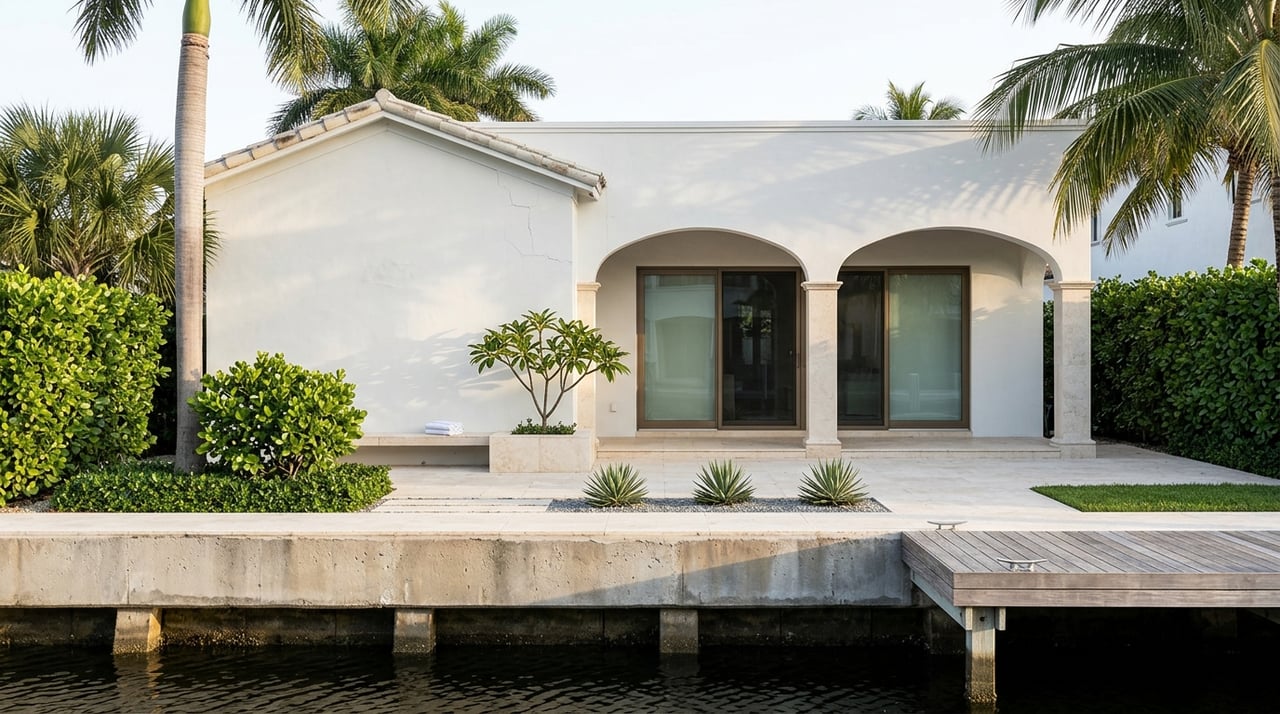
Aqualane Shores is a waterfront neighborhood in the City of Naples, located between Port Royal and Old Naples. According to the Aqualane Shores Association, the community began development in 1949 and is known for deep-water channels and coves that provide Gulf access for many homeowners.
That waterfront setting is a major part of the appeal, but it also changes how you should evaluate a property. The City of Naples identifies the area as low-lying and notes that it relies on gravity drainage through canal connections, which makes it vulnerable to tides and rising sea levels.
In many neighborhoods, buyers can focus mostly on finishes, floor plans, and curb appeal. In Aqualane Shores, you also need to think carefully about elevation, lot geometry, dock feasibility, and the time it may take to improve or rebuild a property.
One of the most important questions in Aqualane Shores is simple: are you buying the home as it exists today, or are you really buying the site for what it could become tomorrow?
That distinction matters because two properties with similar square footage can offer very different long-term value. On the water, the shape of the shoreline, the width of the canal, and the way a dock or lift fits on the lot can all affect how usable the property feels and what redevelopment options may be available.
If you are drawn to a property because of its water frontage, do not stop at the interior. Look closely at the outdoor layout, water access, and how much usable yard remains once marine improvements are considered.
The City of Naples waterfront code recognizes that canals and waterways are not always straight or uniform. Shorelines can be undulating, non-parallel, or located in dead-end areas with limited waterfront footage.
For Aqualane Shores, the side-yard setback for piers, boat lifts, and vessels is 7.5 feet. The shore-normal dimension for a pier is limited to the smaller of 15 feet or 10% of the waterway width. For a boat lift, or a combined pier and lift, the limit is the smaller of 25 feet or 25% of the waterway width.
Those rules can make one lot far more flexible than another. A property with a favorable shoreline shape and canal orientation may support a better dock plan, better vessel clearance, and more usable outdoor space than a neighboring lot that looks similar on paper.
A new build is often the stronger option when the lot is excellent but the existing house no longer matches the value of the site. That can happen when a home feels functionally outdated, sits in a flood-sensitive position, or is likely to trigger major compliance work if you attempt a large renovation.
Building new can give you more control over elevation, layout, systems, and dock planning. In a waterfront setting like Aqualane Shores, that control can be especially valuable because so much of the property experience depends on how the home and site work together.
For some buyers, a new build is the cleanest way to align the house with today’s expectations. You can plan for indoor-outdoor living, updated infrastructure, and a layout designed around the lot instead of trying to force a modern plan into an older footprint.
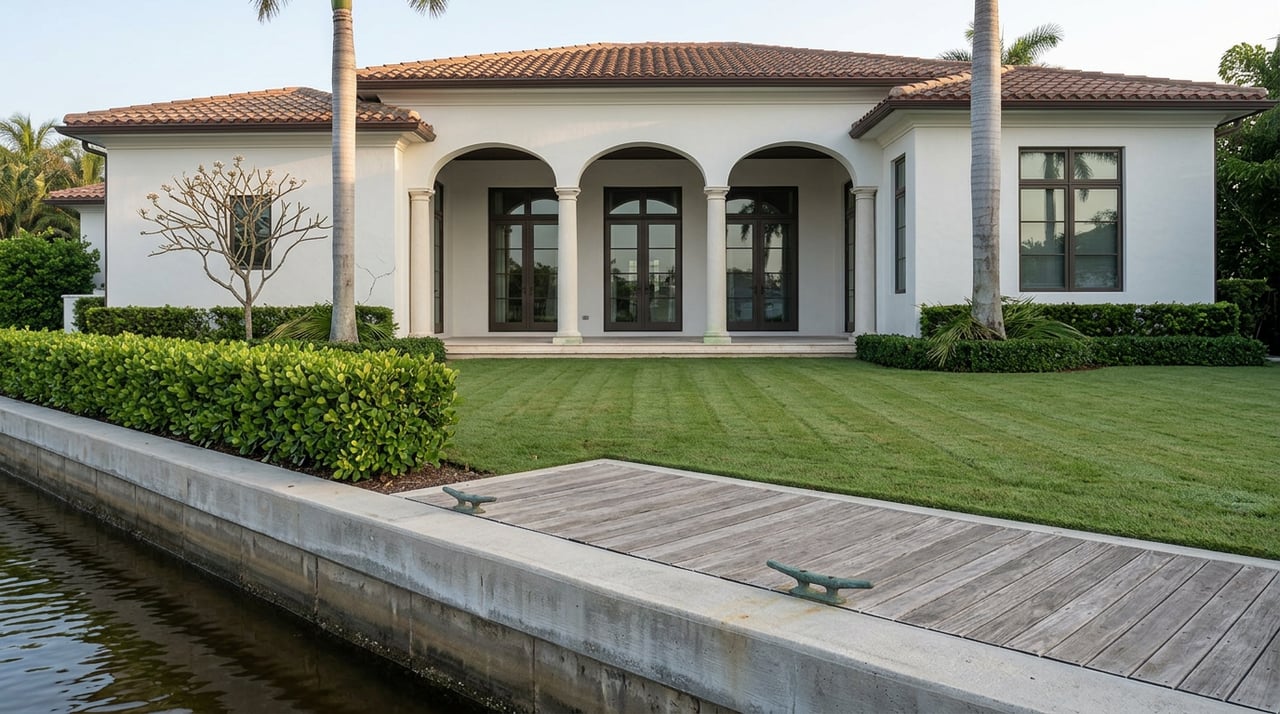
A renovated or turn-key home usually makes more sense when you value speed, certainty, and simplicity. If the existing structure already meets most of your needs and does not force major flood-compliance work, buying a renovated home can reduce project management burden and help you enjoy the property sooner.
This path can be appealing if you want to avoid the moving parts that come with design, permitting, construction oversight, and timeline risk. In a neighborhood where permitting and waterfront rules can add complexity, that convenience is meaningful.
A renovated home can also be the right answer if your priority is lifestyle now rather than customization later. If the dock setup, elevation, floor plan, and finishes are already close to what you want, a move-in-ready purchase may offer the smoother path.
In Aqualane Shores, floodplain rules are central to the new-build versus renovation decision. The City of Naples requires permits for most construction-related work, including construction, enlargement, alteration, repair, demolition, and most electrical, gas, mechanical, and plumbing work.
For permitted work in a Special Flood Hazard Area, the City requires either an Elevation Certificate or a completed City FEMA form. That means flood compliance is not a side issue. It is often part of the core feasibility review.
The biggest threshold to understand is substantial improvement. Naples defines substantial improvement as work equal to or greater than 50% of the structure’s pre-improvement market value.
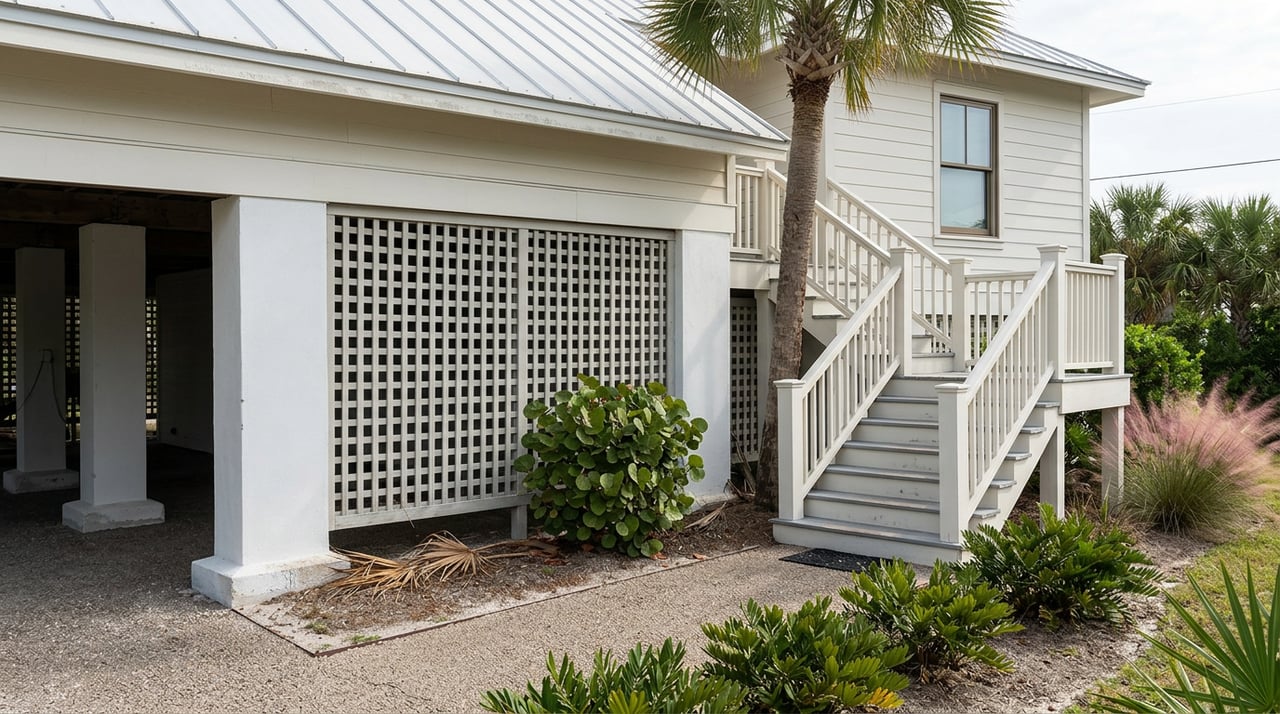
If a building is substantially improved, it must be brought into compliance, including elevation to or above base flood elevation. The City also states that residential floodproofing below base flood elevation is not permitted, including in Zone VE.
In practical terms, this can make a major renovation much more expensive than it first appears. A house that seems like a good candidate for updating may cross the substantial-improvement threshold and trigger requirements that push the project closer to a rebuild in cost and scope.
The City of Naples says all building permit applications must be submitted through its Public Portal. It also notes that permits are governed by the Florida Building Code 8th Edition for applications submitted on or after December 31, 2023, and that new flood maps became effective February 8, 2024.
That matters because timing affects both convenience and carrying costs. Nationally, NAHB’s analysis of Census Bureau Survey of Construction data reports an average of 9.1 months from authorization to completion for single-family homes, 7.6 months from permit to completion for homes built for sale, and nearly 16 months for homes over 6,000 square feet.
In Aqualane Shores, waterfront design considerations, flood review, and marine constraints can reasonably extend that timeline. If you are comparing a new build to a renovated home, the question is not only what each option costs. It is also how long each path may take and how much uncertainty you are comfortable carrying.
If you plan to build or undertake a major redevelopment, financing structure matters. The research notes that construction-only loans usually involve several fund disbursements while the borrower pays accrued interest until completion.
For teardown and rebuild scenarios, construction-to-permanent financing may be an available path. The research also notes that the construction period may not exceed 12 months in any single period or 18 months total under that structure.
For buyers and investors, this is where the financial side of patience becomes real. A lot with excellent redevelopment potential may still be the right buy, but you should evaluate that opportunity with a clear view of timeline, loan structure, and total carrying costs.
Aqualane Shores also has neighborhood-specific infrastructure details worth noting. The City created the West Naples Bay Special Taxing District to improve water quality and navigability and to fund maintenance dredging.
That district includes all Aqualane Shores canals north of 14th Avenue South and south of Galleon Drive, but it does not include properties facing Naples Bay. The ordinance allows ad valorem taxes of up to one-half mill if approved.
The City also approved an Aqualane Shores Utility Line Extension Special Assessment Area for natural gas and fiber optic extension. For buyers comparing properties, these distinctions can be important because canal-front and bay-front parcels may carry different district obligations and waterfront constraints.
If you are choosing between a new build and a renovated home in Aqualane Shores, focus on four variables before you focus on cosmetics alone:
Then compare two versions of the same purchase:
If the existing home already works well and avoids major compliance issues, a renovated property may be the more efficient choice. If the site is the true prize and the current structure limits the property’s full potential, a new build may offer the better long-term fit.
There is no one-size-fits-all answer in Aqualane Shores. Some buyers want immediate enjoyment with minimal friction. Others are willing to accept a longer timeline in exchange for a home that is tailored to the lot, the water, and their long-term plans.
What matters most is making the decision with the right local lens. In this neighborhood, the best opportunities often come from understanding the interaction between house, lot, canal, flood rules, and timing.
If you are weighing a turn-key purchase against a redevelopment play, a clear property-by-property analysis can save time and help you avoid expensive surprises. For tailored guidance on Aqualane Shores waterfront opportunities, connect with The Silvers Group.

Bringing together a team with the passion, dedication, and resources to help our clients reach their buying and selling goals. With you every step of the way.
Get In Touch With Our Team To Learn More